Commercial Water Restoration in Saddle Creek, IN
Saddle Creek Water Restoration dries Saddle Creek buildings zone by zone, so the parts of your operation still in use keep running.
Searching for Commercial Water Restoration near Saddle Creek? Saddle Creek Water Restoration dispatches 24/7, documents everything, and works with your insurance carrier from first call to final walkthrough. Call (765) 703-7292.
- Service: Commercial Water Restoration for Saddle Creek homeowners
- Service area: Saddle Creek, IN and surrounding areas
- Response time: Rapid emergency dispatch for Saddle Creek inquiries; crews available 24/7
- Licensed and insured (License #RC21100059)
- Serving Saddle Creek, IN since 2018
Commercial Water Damage Restoration in Saddle Creek
For offices and other commercial buildings in Saddle Creek, we'll handle water extraction and drying at any hour.
Site Conditions
Properties near the creek of the same name carry added flood risk in heavy rain. Freeze and thaw cycles each winter can burst pipes in unheated parts of a commercial building. Your building's own drains and roof get checked on the first walkthrough with whoever manages the property.
We cover commercial properties across Saddle Creek, including the area around the Clay Terrace outdoor shopping center. We also handle commercial water losses in Jackson's Grant on Williams Creek.
Commercial Water Restoration for Saddle Creek Businesses
Nobody was in the building from Friday evening until this morning, which gave a supply line the whole weekend to run. Water that sat that long has already moved into wall cavities, under glue down flooring, and out past the suite where it started. Crews and drying equipment dispatch to commercial water losses in Saddle Creek within 2 hours, and the first thing Saddle Creek Water Restoration documents is how far the water went.
Saddle Creek Water Restoration documents a commercial water loss in Saddle Creek by suite and by common area from the first walkthrough. Photos, moisture readings and the scope get split the way a lease and a building file need them. Ownership, tenants and your carrier can all read the same record, and you decide who gets which part of it.
Containment goes up early so the building keeps working. Saddle Creek Water Restoration crews poly off the affected zone, put it under negative pressure where the water category calls for it, and keep corridors and egress clear. Tenants outside the zone keep operating while equipment runs inside it. Zone boundaries get drawn with your management office, so nobody gets surprised by a plastic wall on Monday morning.
Saddle Creek Water Restoration crews take readings the same way on every job, with baseline readings from unaffected material in the same building, the same locations read each day and the same meters. The drying log shows the progress in a form anyone can check. A consultant can repeat the readings in your Saddle Creek building, which is what makes them useful to you.
The gap between finding the water and starting mitigation is the part you control, and your carrier will look at it. Saddle Creek Water Restoration answers commercial water calls in Saddle Creek around the clock and dispatches within 2 hours. One call starts the clock on documentation as well as on drying.
Signs You Need Commercial Water Restoration
If you notice any of these in your Saddle Creek building, schedule a free inspection before the issue worsens.
Sprinkler branch line cracked at a coupling with water still running from the ceiling
Drinking fountain supply line weeping inside a wall cavity
An interior roof drain leader gurgling or backing up during heavy rain
A damp ring spreading across a suspended ceiling tile directly below a plumbing riser
Ice building up on a walk in cooler floor where water collected and refroze
Water bills for the property climbing with no change in occupancy or use
The tenant below reporting drips from light fixtures or air diffusers in their suite
Resilient tile seams popping loose, with tiles rocking underfoot along a corridor
Fire sprinkler discharge with water still spreading out across the floor plate
Water tracking out from under a server rack or running along a cable tray
How Saddle Creek Water Restoration Handles Commercial Water Restoration
We follow these steps in order on every Saddle Creek job.
Air Handling Coordination
Units that serve the wet zone get identified with your engineer and HVAC contractor. Affected air handling is isolated or switched off, which keeps moisture from riding the return air to unaffected floors.
Overhead Water and Ceilings
Sagging ceiling panels are punctured over protection so trapped water drains into a controlled spot. Wet tile and insulation come down, and the grid gets checked before the plenum above it gets dried.
Structural Drying Design
Dehumidification gets sized from affected cubic footage and material porosity, with dry air ducted into ceiling plenums, wall cavities and shafts. Air movers get placed to keep surface air moving, and the calculation gets revised as readings change.
Equipment Placement and Circuits
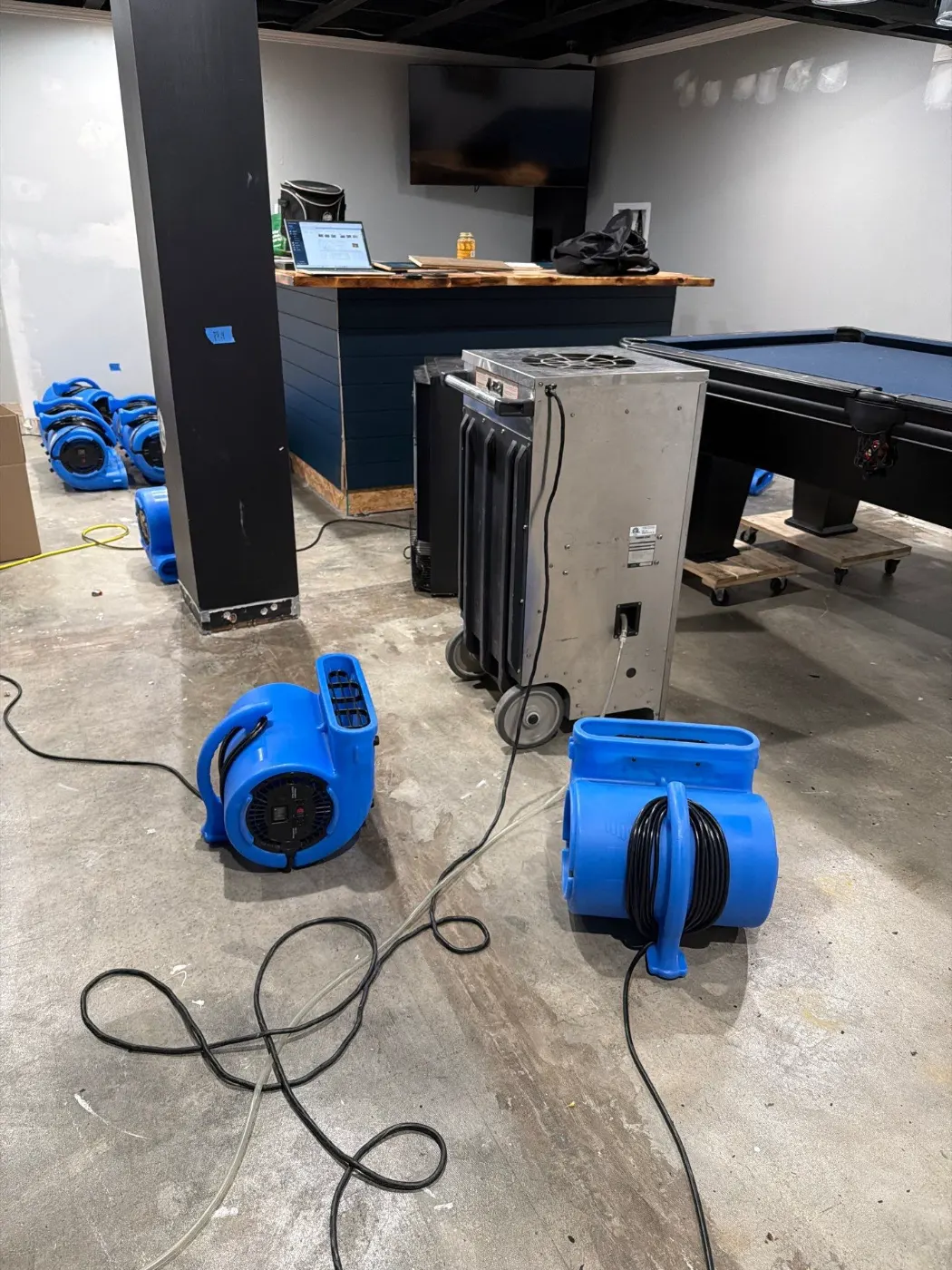
Air movers and dehumidifiers go where the drying calculation puts them, with ducting routed into plenums and shafts. The crew confirms what each circuit can carry and routes cords overhead or along walls to keep exits clear.
Daily Monitoring and Reporting
A technician reads the same locations every 24 hours, logs them against unaffected baseline readings taken elsewhere in the building, and repositions equipment as the wet zones shrink. The day's numbers go to your management office.
Commercial Water Restoration in Saddle Creek
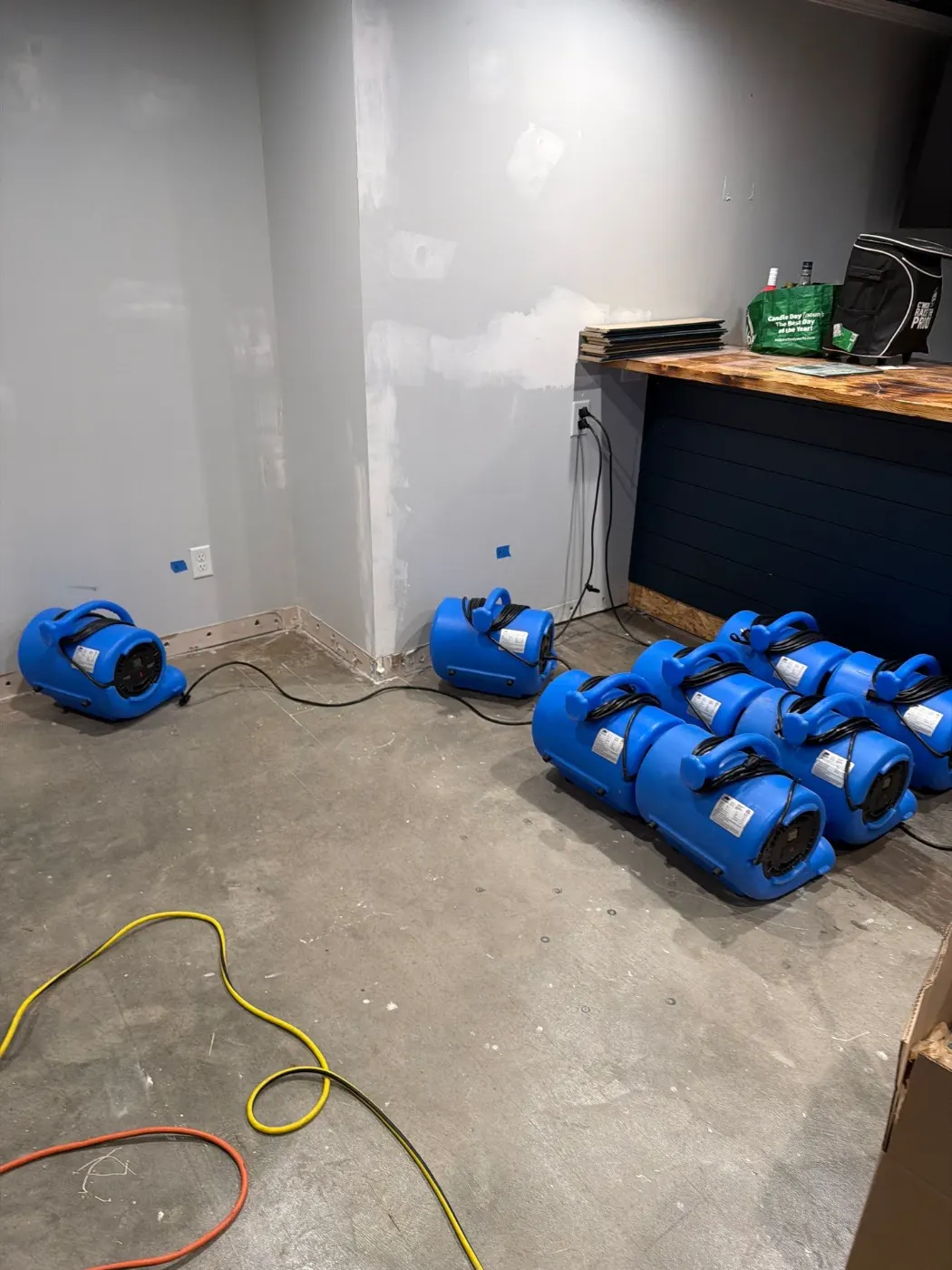
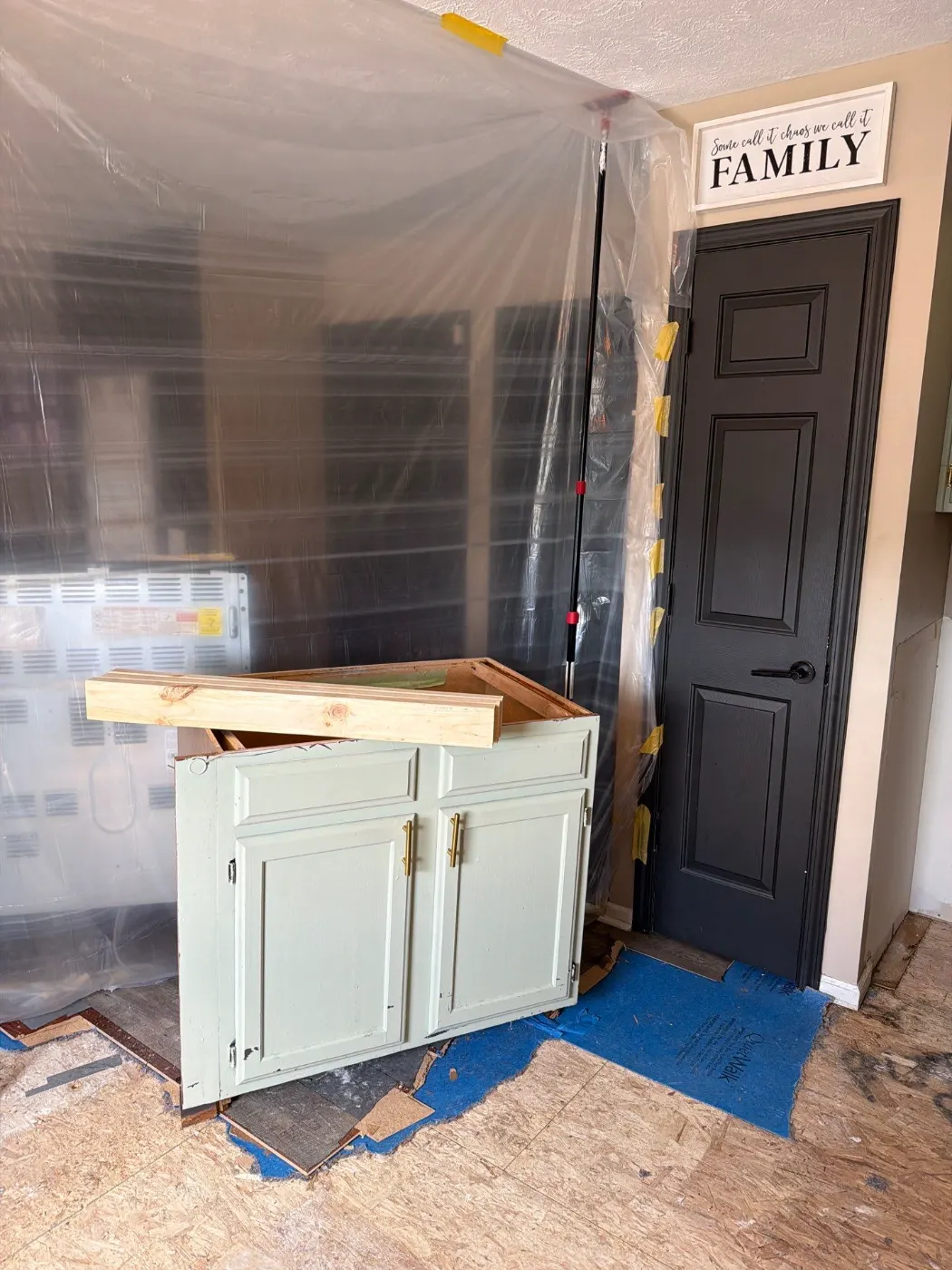
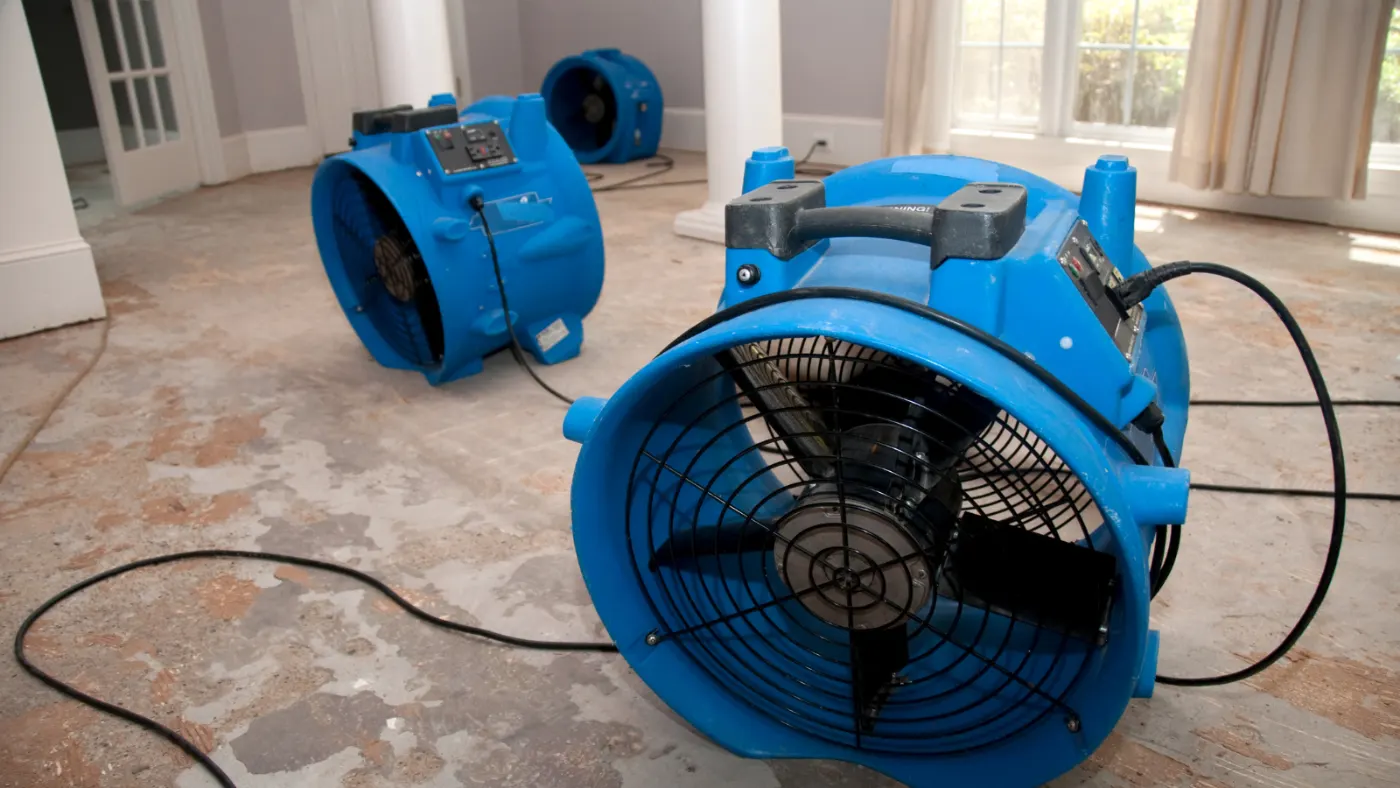
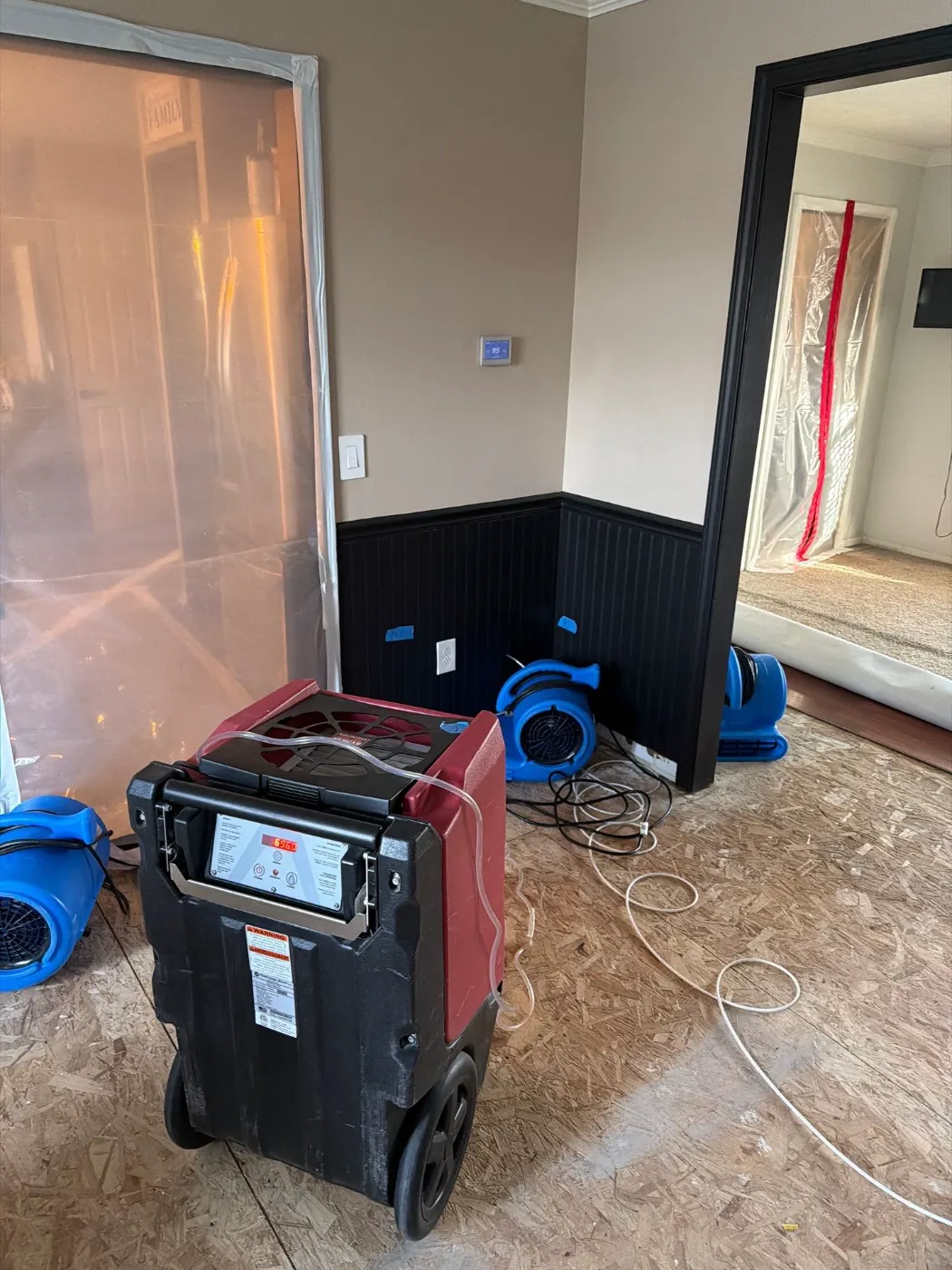
Photographs from real commercial water restoration jobs completed by our crew in Saddle Creek and surrounding areas.
Commercial Water Restoration FAQ
Questions Saddle Creek property managers ask us about commercial water restoration.
Guidance and Standards for Commercial Water Restoration
- The ANSI/IICRC S500 is the published standard for professional water damage restoration. The current edition is the Fifth Edition, 2021. IICRC S500 Standard
- EPA advises drying water damaged areas and items within 24 to 48 hours to prevent mold growth. EPA: A Brief Guide to Mold, Moisture and Your Home
Saddle Creek Neighborhoods We Serve
We take commercial water restoration calls in every part of Saddle Creek. Pick your neighborhood for local details.
Other Restoration Services in Saddle Creek
Saddle Creek Water Restoration handles the full scope of restoration work. Explore our other services below.
Water Damage Restoration in Saddle Creek
24/7 emergency response. IICRC certified water restoration from extraction to full dry out.
Learn more →Basement Flooding in Saddle Creek
Basement water emergencies handled fast. Extraction, drying, mold prevention.
Learn more →Sewage Cleanup in Saddle Creek
Category 3 biohazard cleanup. Full containment, decontamination, structural restoration.
Learn more →Request Commercial Water Restoration
Reach Us Directly
Our team is available 24/7 for emergencies and ready to schedule inspections during business hours.
Need Immediate Help?
For active water or mold emergencies, call us directly. We are available 24/7.